12 IKEA Kitchen Hacks for Families With Young Kids
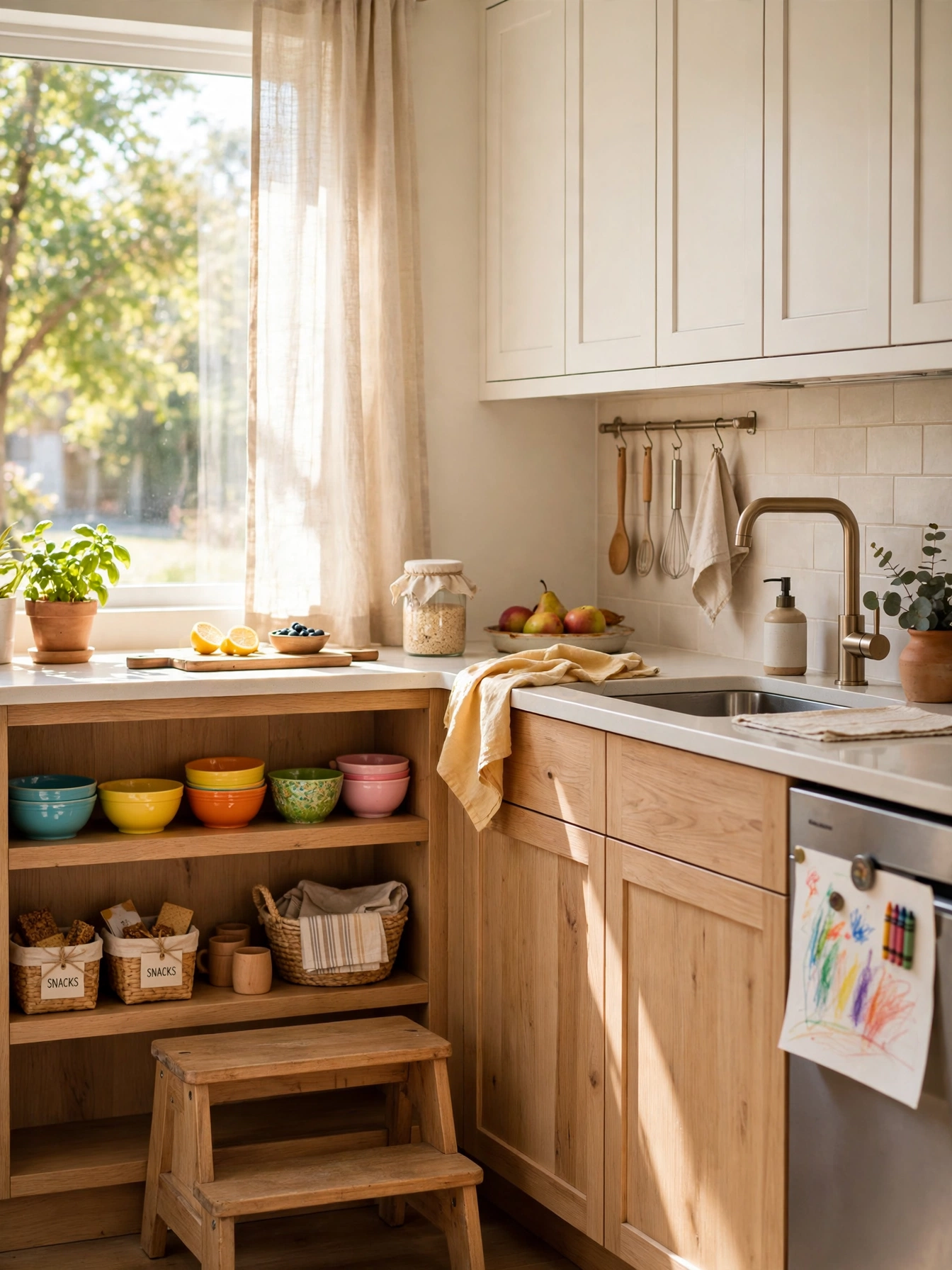
Breakfast ends with cereal on the floor, lunchboxes half packed, and dinner cooked around small hands reaching for everything on the counter. A family kitchen is busy in a way a tidy showroom kitchen never is, and the usual storage advice does not cover it. You need spots that work at their height, not yours.
The fix is not a bigger kitchen. It is giving children their own small spots to work in, so the main counter stays free for cooking. When a child has a drawer for cooking tools and a tray for drinks, they stop pulling open every cupboard to find one thing.
These IKEA kitchen hacks are built for that kind of family life. Each one is cheap, simple to fit, and made for small kitchens where every inch counts. Pick two or three, fit them this weekend, and let the kitchen start working for the whole family, so mornings get calmer and dinner gets easier.
1. A Cooking Drawer Just for Kids With Safe Tools They Can Grab
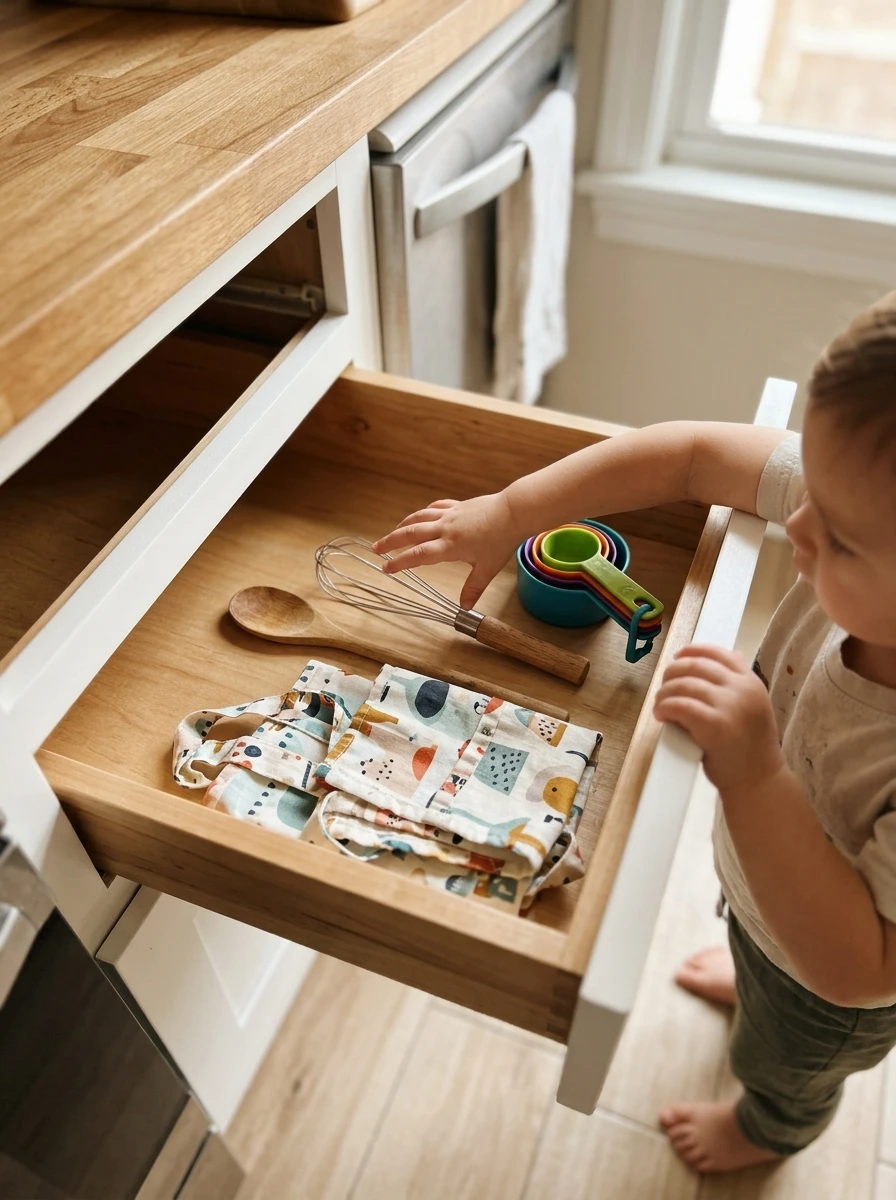
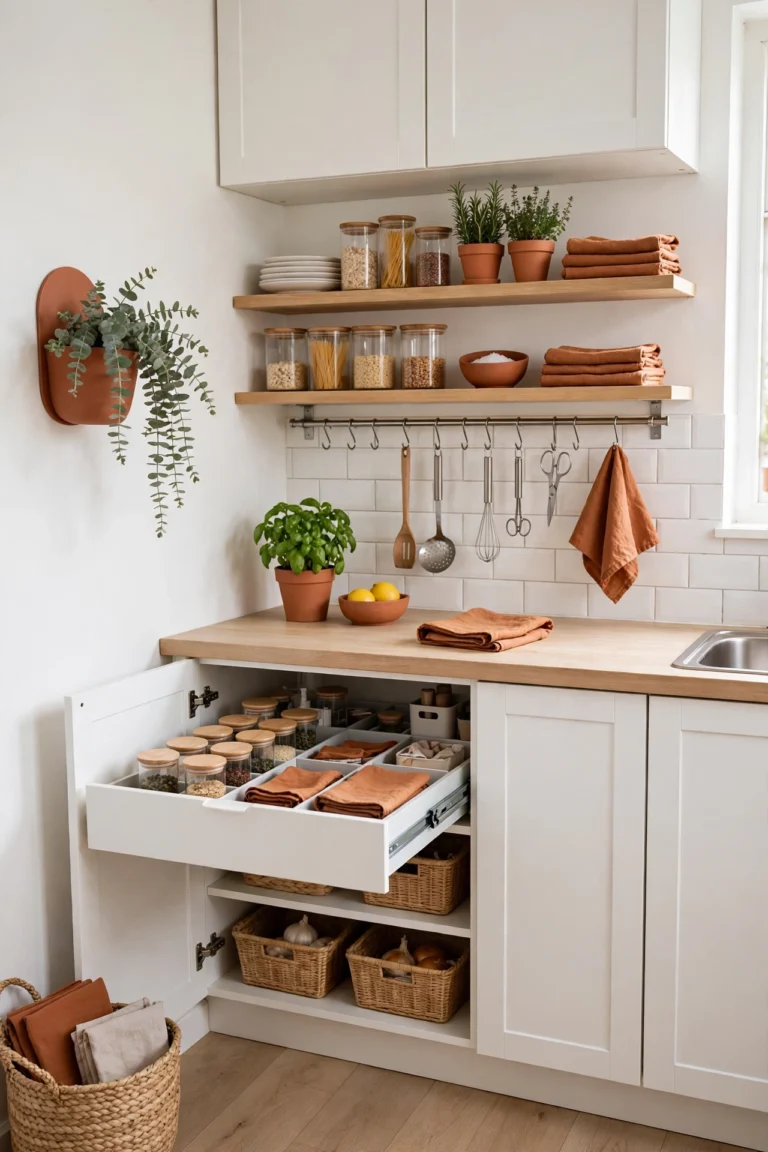
Children want to help in the kitchen, and the knife drawer is the first place they reach. Give them a drawer of their own instead, low down and close to the counter where you cook. Fill it with a wooden spoon, a small whisk, plastic measuring cups, and a blunt butter knife for spreading.
Keep the drawer to five or six tools, so it never turns into a junk drawer. Add a small apron on top, and let your child open it when dinner starts. They know where their tools live, and you know the sharp ones stay in your drawer.
Cooking together gets easier when a child can fetch their own whisk without asking. It costs almost nothing, and it turns helping into a habit that sticks.
Also view: 12 IKEA Kallax Makeover Ideas for a Minimalist Scandinavian Interior
2. A Breakfast Tray Set the Night Before So Mornings Run Themselves
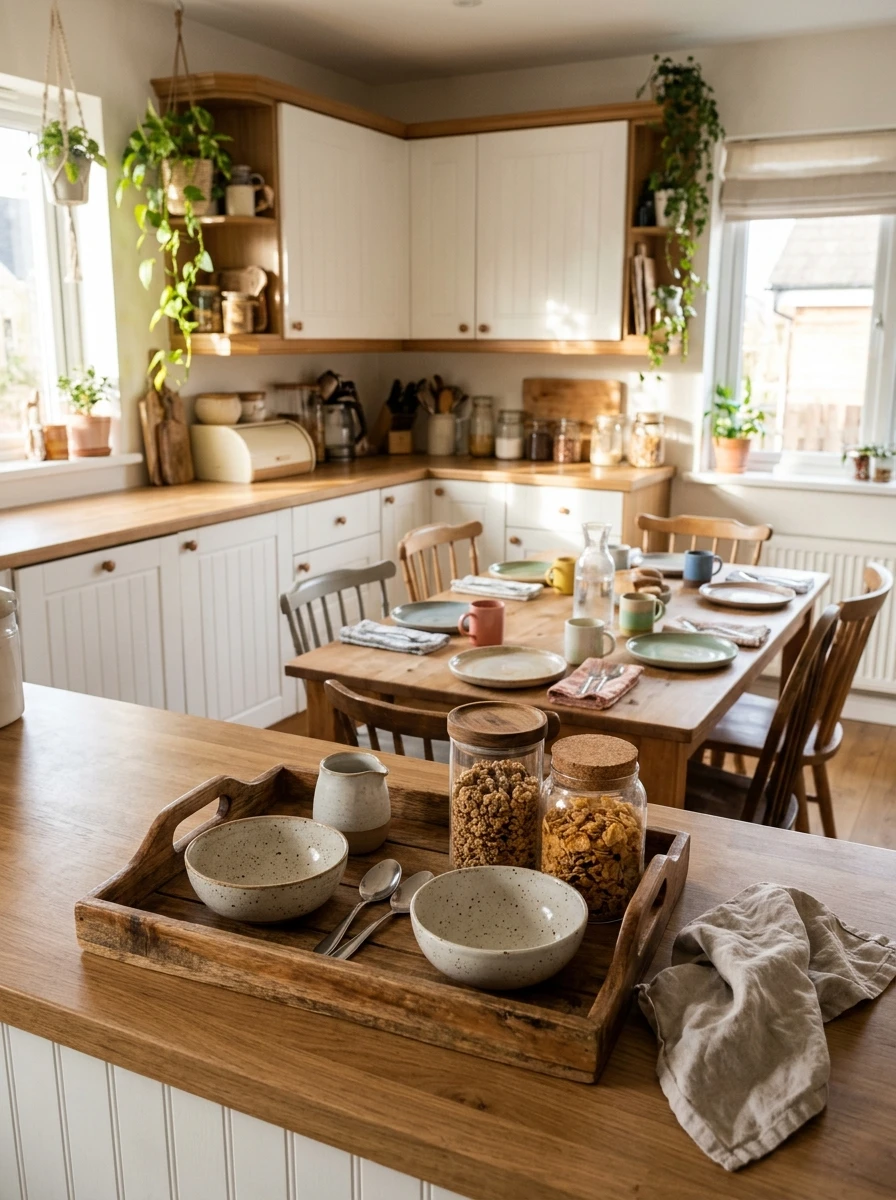
Mornings go wrong when everyone wants cereal, milk, and a bowl at the same time. Set a tray the night before with bowls, spoons, and a small jug, and the morning starts without the scramble. Put the tray on the counter or the table, wherever your family eats.
Fill two small jars on the tray with cereal, so children can pour their own without lifting a heavy box. Keep the milk in a small jug in the fridge, ready to carry over. The tray holds everything in one place, so nothing wanders across the counter.
A tray you set in two minutes at night saves ten minutes of hunting in the morning. Children pour their own breakfast, and you get a quiet start to the day.
What to grab first
3. A Table-Setting Station in a Drawer by the Dining Table

Setting the table is a job children can do well, if everything they need lives in one place. Give them a drawer near the dining table with placemats, napkins, and cutlery sorted into small boxes. One drawer, one job, and no hunting through the kitchen.
Lay a placemat on the table as a guide, so a child knows where each plate and fork goes. Keep the cutlery in a small tray inside the drawer, with forks, knives, and spoons in their own rows. A simple diagram taped inside the drawer lid shows the layout for younger children.
Dinner gets set without you leaving the stove, and children learn a skill they will use for years. The drawer stays tidy because everything in it has a home.
4. A Spill-Proof Drink Station With Lidded Cups on a Tray
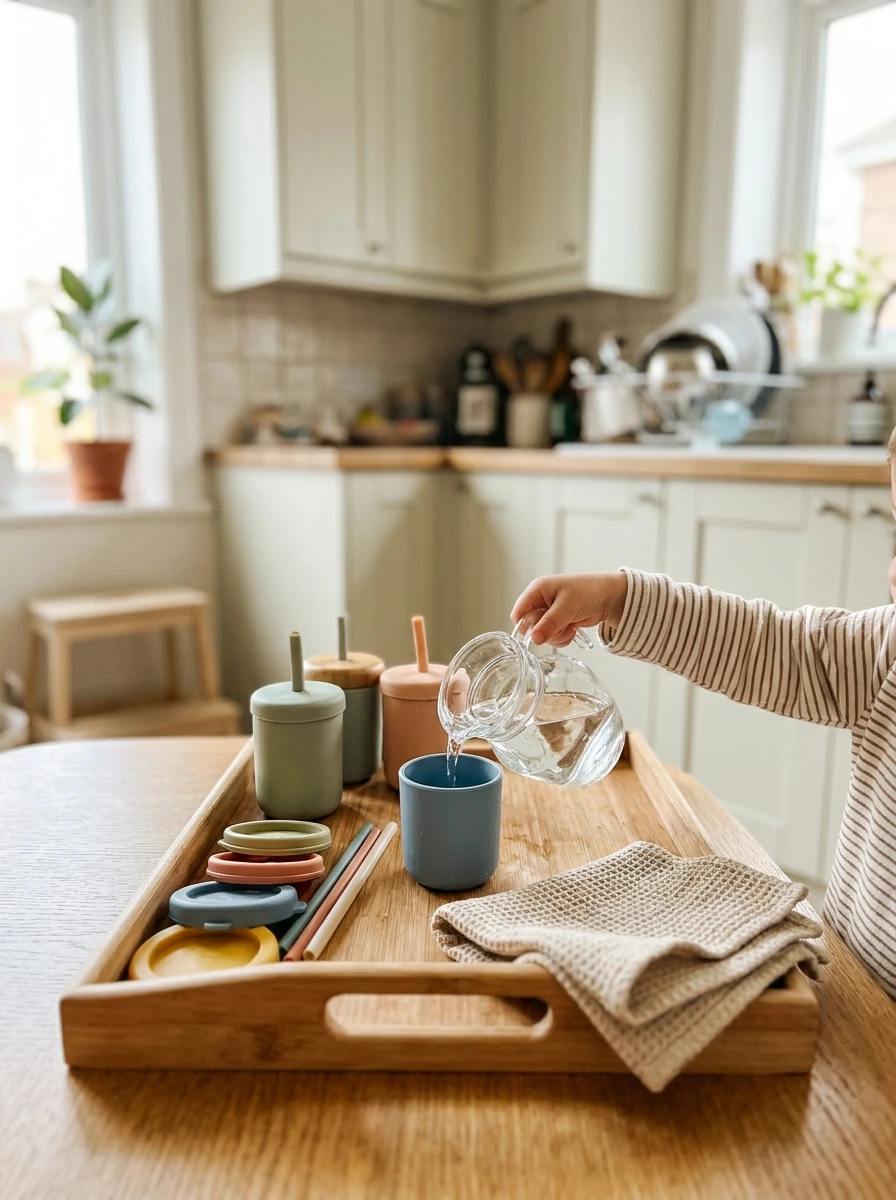
Spills happen when children pour from a big jug into a tall glass. A drink station on a low stretch of counter fixes that with a tray, a small jug, and lidded cups. Everything stays on the tray, so a spill lands on the tray and not the floor.
Pick cups with lids and short handles, and keep two or three on the tray at a time. Fill the jug with water each morning, and let children pour their own drinks through the day. A folded cloth on the tray handles the drips.
Children drink more water when they can reach it themselves, and you mop the floor far less. The tray costs little, and it keeps the counter dry between meals.
💡 Quick Tip
Pick lidded cups with short handles, and keep only two or three on the tray, so small hands never have to reach past a full row.
5. A Homework Corner at the End of the Counter With a Supply Caddy

Homework spreads across the kitchen table just as dinner needs the space. Give it a corner of its own at the end of the counter, with a caddy for pencils, paper, and a timer. Schoolwork stays in one spot, and the rest of the counter stays free for cooking.
These IKEA kitchen hacks work best when each corner has one clear job, and this corner is for schoolwork only. Keep the caddy small enough to lift off the counter when dinner is ready, and put it back when the books come out again.
Children settle faster when their things are already waiting in the corner. Dinner and homework stop fighting for the same space, and the evening runs smoother.
Books, pencils, and paper spread across the whole table just as dinner needs the space.
One tidy corner holds the caddy, and the rest of the counter is free for cooking.
6. A Veggie Wash Bowl Where Kids Help With Dinner Prep

Children love to help with dinner, and washing vegetables is a job they can do safely. Set a wide bowl of water on a low counter or a sturdy table, with a colander beside it. Little hands can rinse carrots and potatoes without reaching the sink.
Give each child one vegetable to wash, and show them how to rub the dirt off under the water. Lift the clean vegetables into the colander, then tip the dirty water into the sink when the job is done. The bowl keeps the water in one place.
Dinner prep turns into time together, and children who wash the vegetables are far more likely to eat them. The bowl costs nothing extra, and the job takes five minutes.
Fill a wide bowl with water and set it on a low counter.
Let each child wash one vegetable and rub the dirt off.
Lift the clean vegetables into the colander and tip the water away.
7. A Dinner Jar That Picks Tonight’s Meal for You
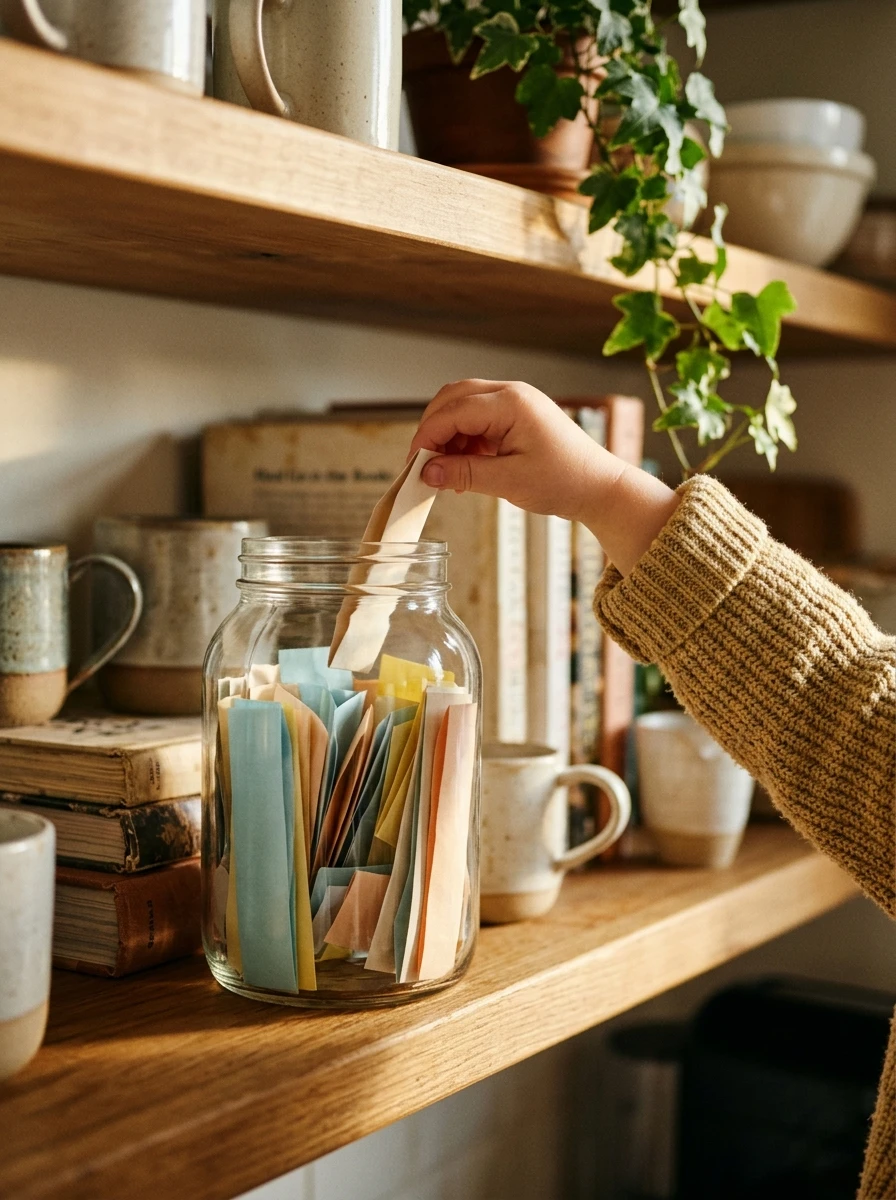
Choosing dinner every night is tiring, and children always want something different from what you planned. A dinner jar ends the nightly debate with slips of paper and a lucky dip. Write ten family meals on slips, fold them, and drop them in a jar.
Let a child pull one slip out each afternoon, and that is dinner. Keep the meals simple, things you already cook and already have the ingredients for. If a slip names a meal you cannot make that day, put it back and pull another.
Children eat better when they helped choose the meal, even if the choice came from a jar. The jar lives on a shelf, costs nothing to make, and turns a daily argument into a small game.
Let the jar choose dinner. A child who pulled the slip will eat the meal.
8. Picture Labels on a Low Cupboard Door That Pre-Readers Can Follow

Young children cannot read a written label, but they can follow a picture. Stick picture labels on a low cupboard door, with a photo or a simple drawing of what lives inside. A cup for cups, a bowl for bowls, and a plate for plates.
Take the photos yourself, so the label shows the exact cup your child uses. Stick them at your child’s eye level, and keep the cupboard to things they are allowed to fetch alone. The pictures do the talking, so you do not have to.
Tidying up gets easier when a child can see where things belong. The labels cost almost nothing, and the cupboard stays in order long after the novelty wears off.
| Picture Label | Written Label |
|---|---|
| Works for children who cannot read yet | Needs a child who can read words |
| Shows the exact cup or bowl inside | Names the item but shows nothing |
| Tidying becomes a matching game | Tidying still needs an adult to read it |
9. A Baking Day Kit in One Box That Lives Ready on a Shelf
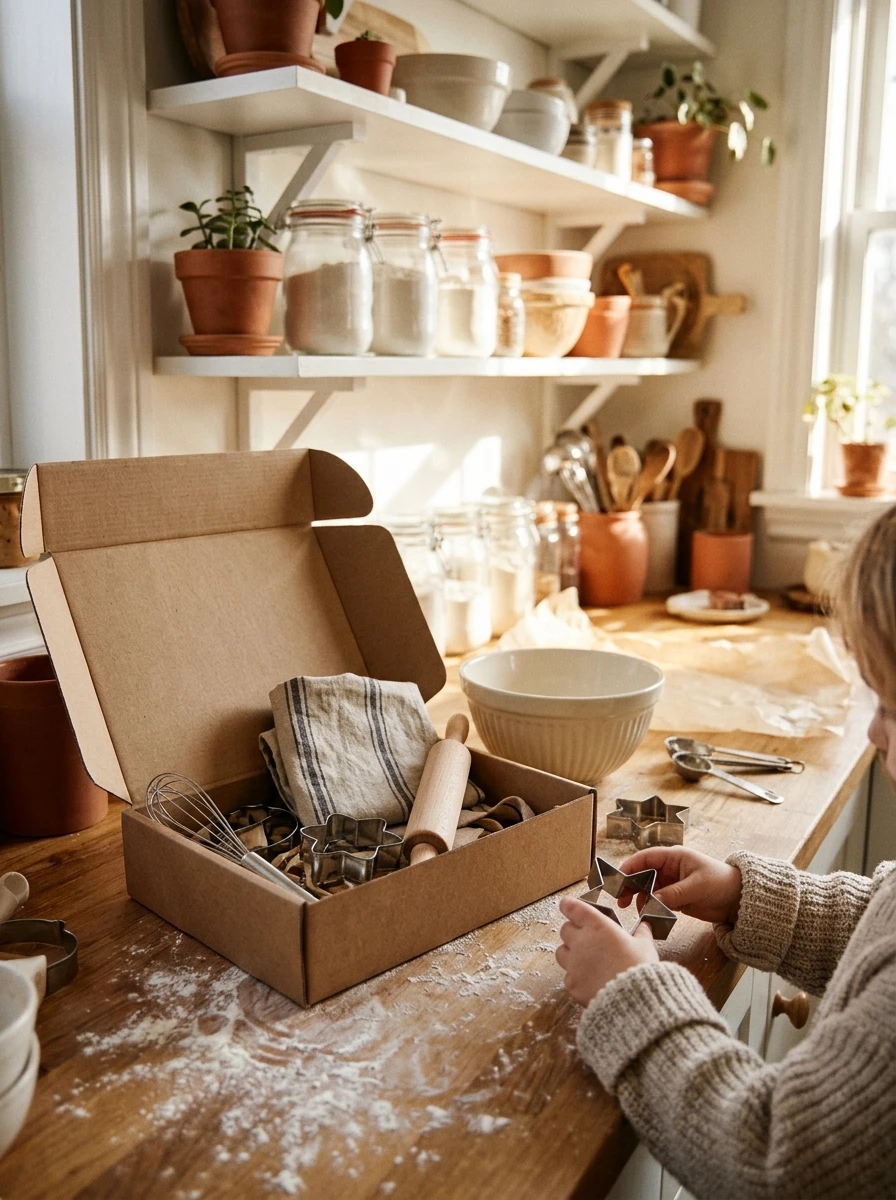
Baking with children means hunting for the whisk, the cutters, and the apron while the butter softens. A baking day kit in one box ends the hunt. Pack a small whisk, cookie cutters, a rolling pin, and an apron into a box that lives on a shelf.
Keep the box at a height children can reach with help, and bring it down together when baking day starts. These IKEA kitchen hacks save time because everything for the job is already gathered, and nothing gets left behind in a drawer.
Children bake more often when the kit is ready to grab, and the kitchen stays calmer because the tools come out and go back in one box. Pack it away clean, and it is ready for next time.
Pack kid-sized tools, an apron, and cutters in one box.
Put the box back clean, so it is ready next time.
Sharp knives or glass bowls in a children’s kit.
Loose tools scattered across three drawers.
10. A Kid-Sized Clean-Up Caddy for After Every Meal
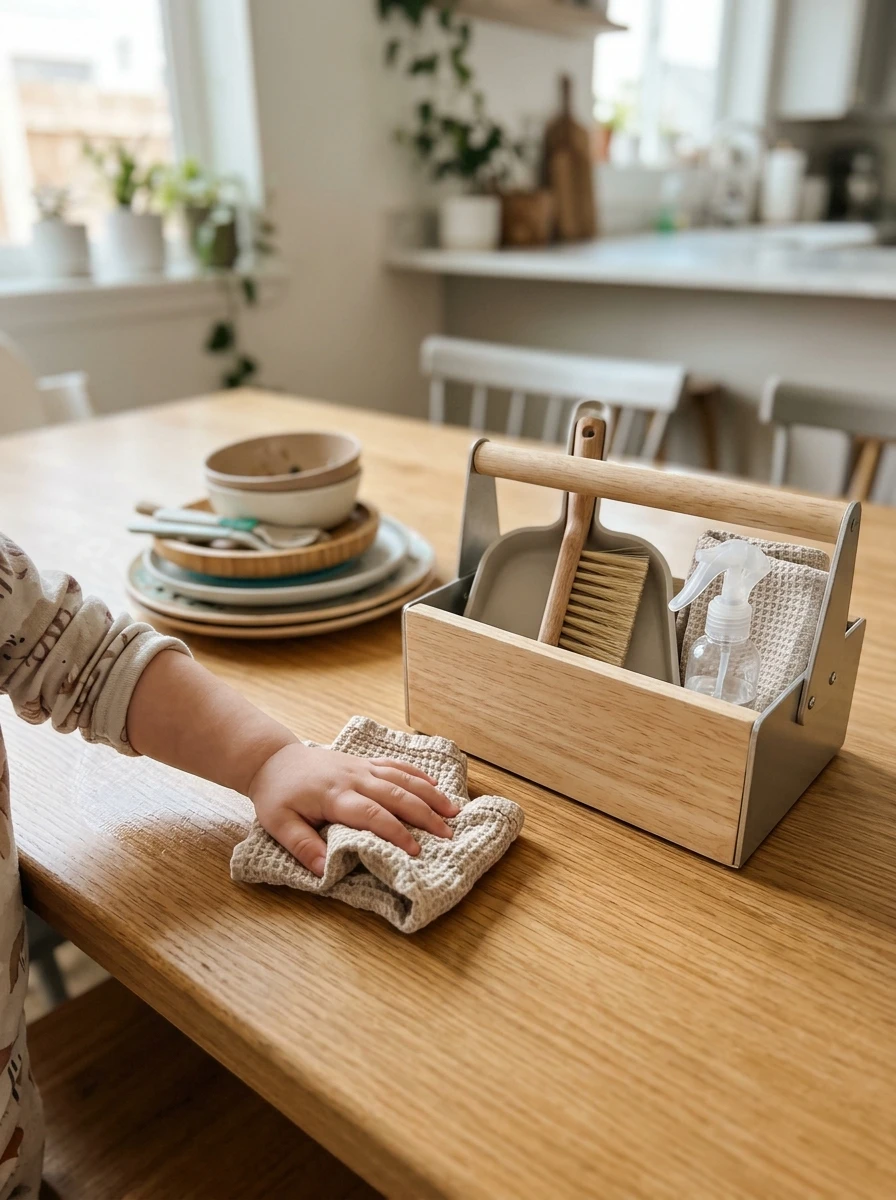
After a meal, the table needs wiping and the floor needs a sweep, and small hands can do both. A kid-sized clean-up caddy holds a cloth, a small dustpan and brush, and a spray bottle filled with plain water. Children carry it to the table when dinner ends.
Keep the caddy under the sink or on a low shelf, where children can reach it without climbing. Show them how to wipe the table in long strokes, then sweep the crumbs into the dustpan. The caddy makes cleaning a job they own, not a chore they avoid.
Tables get wiped more often when the tools are small enough for the job. The caddy costs little to put together, and it teaches children to clear up after themselves.
- ▸A cloth for wiping the table in long strokes.
- ▸A small dustpan and brush for the crumbs.
- ▸A spray bottle filled with plain water only.
11. A Phone Basket on the Counter That Keeps Dinner Screen Free
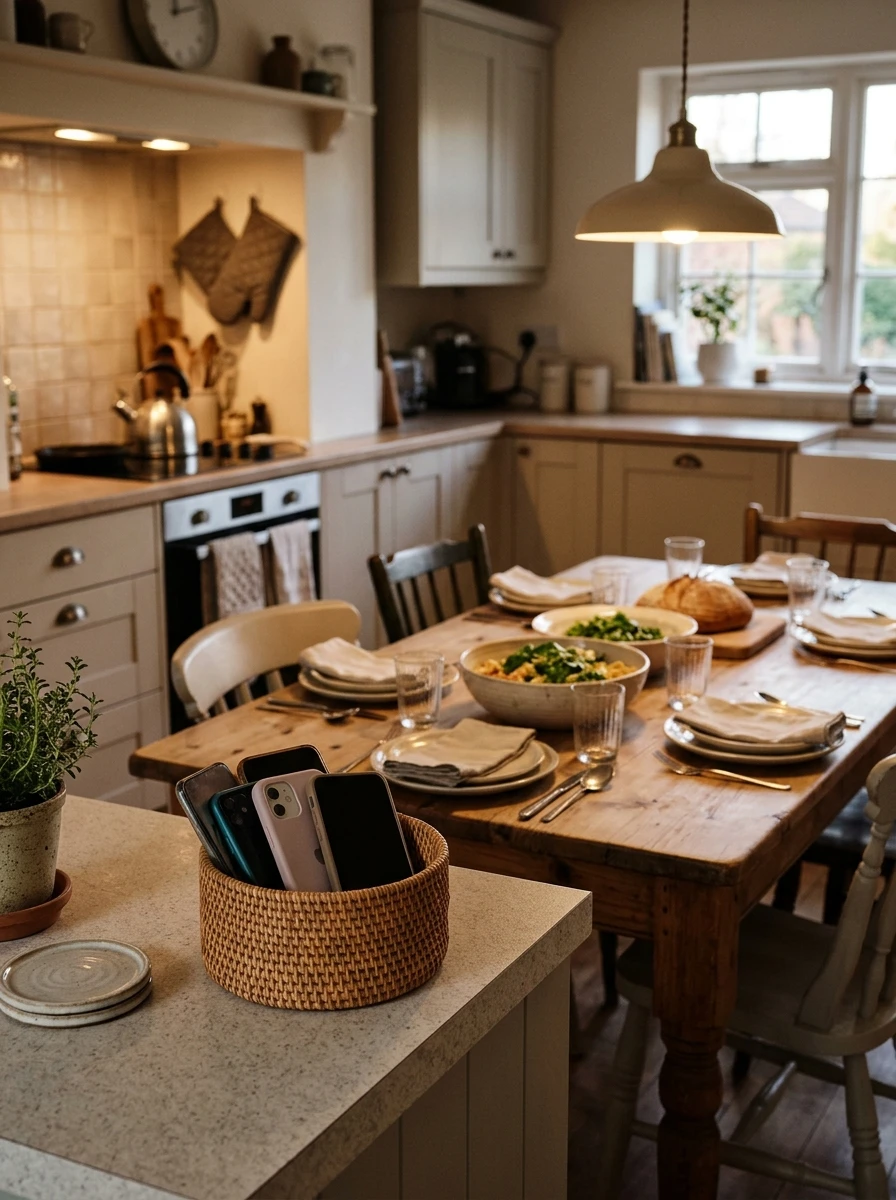
Phones at the dinner table pull everyone’s attention away from the meal. A phone basket on the counter ends the habit without a lecture. Phones go in the basket when dinner is served, and they come out when the plates are cleared.
Pick a basket big enough for the whole family’s phones, and put it where everyone can see it. Make the rule the same for adults and children, so it feels fair. The basket sits by the door or on the counter, ready every evening.
Dinner conversation comes back when the screens are out of reach. The basket costs almost nothing, and the habit sticks because the rule is simple and shared.
12. A Family Recipe Binder on a Low Shelf That Lets Kids Pick Dinner

Children eat more willingly when they helped pick the meal, and a family recipe binder lets them do just that. Fill a binder with your family’s favourite recipes, each with a photo of the finished dish. Keep it on a low shelf where children can flip through it.
Let a child pick one recipe from the binder each week, and cook it together at the weekend. Add new recipes as you try them, and let children stick a star on the ones they love. The binder grows into a record of meals your family actually enjoys.
A binder full of photos beats a shelf of cookbooks children never open. These IKEA kitchen hacks work because they hand children a real choice, and dinner becomes something the whole family planned together.
Also view: 15 IKEA Kitchen Hacks for Creating a Stylish Breakfast Bar
What to grab first
A Family Kitchen That Works for Everyone
A family kitchen does not need to be bigger to work better. It needs small spots that belong to the children, a drawer for their tools, a tray for their drinks, and a corner for their homework. When children can reach what they need, they stop pulling open every cupboard, and the main counter stays free for cooking. That is the whole trick.
Pick two hacks from this list and fit them this weekend. Start with the cooking drawer and the drink station, and see how the mornings change. Save this list for the next time the kitchen feels crowded, because these IKEA kitchen hacks are here whenever your family is ready for the next one.
Before You Start
✅ A tape measure and the inside width of the drawer you plan to use
✅ One hack picked, the one that fixes your biggest daily annoyance
✅ A note of the exact size before you shop, so nothing comes home wrong
✅ A free evening to fit it and live with it for a week
✅ A clear counter to start from, so you can see the difference right away